Bishop Martin Church of England Primary School
Spirituality at Bishop Martin
Learning Together, in God's Love
At Bishop Martin, spirituality is a golden thread woven through everything we do. Guided by our Christian vision — “...with God all things are possible” (Matthew 19:26) — we nurture an environment where every child and adult can thrive, flourish, and discover a deep sense of meaning, purpose and connection.
What do we mean by spirituality?
At Bishop Martin, we follow the LDST definition of spirituality, which places emphasis on connection — to ourselves, to one another, and to God’s wonderful world. Spirituality is:
“A deep connection to ourselves, others and the wider world, brought about by a sense of belonging and appreciation of the beauty and wonder of God’s creation.”
It is not the same as having a particular faith. A child can be spiritual regardless of belief or background. For Christians, spirituality also includes growing in relationship with God — Father, Son and Holy Spirit.
Spirituality invites insight, reflection, stillness, curiosity, and wonder. It helps children understand who they are, what they believe, and how they see the world.
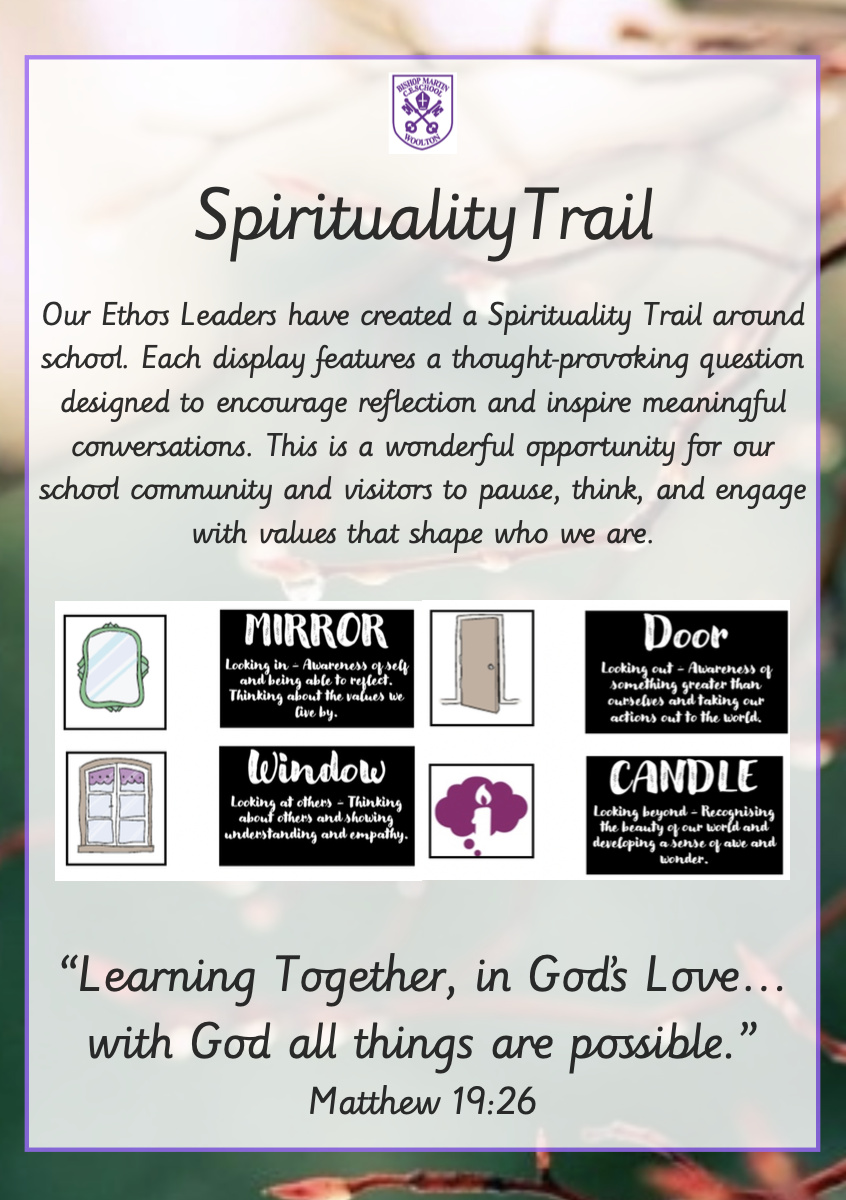
Our Spirituality Model: Windows, Mirrors, Doors & Candle
To help the whole community understand and talk confidently about spirituality, we use four simple symbols throughout school life, inspired by the work of Liz Mills:
🪞 Mirror — Self
- Awareness of our uniqueness
- Reflection on feelings, choices and experiences
- Developing imagination, values and creativity
🪟 Window — Others
- Empathy, understanding and respect
- “Loving your neighbour”
- Making a positive difference through courageous advocacy
🚪 Door — Beyond
- Awareness of something bigger than ourselves
- Encountering God (including prayer and worship)
- Asking and exploring life’s big questions
🕯️ Candle — Beauty & Awe
- Enjoying the miracles of everyday life
- Experiencing wonder through nature, art, music and creativity
- Taking time to notice what truly matters
These symbols appear throughout our classrooms, Collective Worship and wider curriculum. They help children recognise spiritual moments as they happen — during joy, challenge, stillness and discovery.
How We Nurture Spirituality Every Day
Spiritual growth happens constantly: in lessons, in worship, on the playground and during quiet personal moments. Here’s how we support it across school life:
Collective Worship
Collective Worship is at the heart of our school, offering space for reflection, prayer, silence, praise and discovery. Our close partnership with St Peter’s Church enriches this further, with weekly services led by our Vicar and special celebrations throughout the year (Harvest, Christmas, Easter, Remembrance).
Religious Education
RE has an important and central place in our curriculum, supporting children to learn about religions and from them. Through RE, pupils explore meaning, truth, identity, belief and the impact of faith on life today. We aim to develop curiosity, reflection and respect for Christian and world faiths.
Across the Curriculum
Spirituality is embedded throughout all subjects, for example:
- Science — awe and wonder in the natural world
- Art & Music — creativity, emotion, beauty, imagination
- PSHE — relationships, identity, emotional awareness, values
- Outdoor Exploration — noticing nature, caring for creation
- History & Geography — exploring culture, place, diversity and community
Teachers plan opportunities for 'spirituality spotlight' moments using the four-symbol model.
Our Spiritual Aims for Every Child
Through spiritual development, we aim to help children and adults:
-
Be guided by their beliefs and values
- Understand their uniqueness and worth
- Develop awareness and respect for others’ beliefs
- Build good mental health and emotional resilience
- Make sense of feelings and experiences
- Reflect on life’s big questions and mysteries
- Grow through challenge, disappointment and change
- Value difference and diversity
- Feel a sense of awe, curiosity, beauty and wonder
- Care for creation and recognise responsibility towards the world
These aims support children to become thoughtful, compassionate and reflective individuals.